Showing posts with label Female Author. Show all posts

11 August 2014

Review - Dreamwalker by C. S. Friedman


Dreamwalker
Dreamwalker by C.S. Friedman

My rating: 4 of 5 stars


This was markedly better than some reviews made it out to be. It does help if you start it with the mentality that it's a YA-level book; adults are not the intended audience but are not excluded from enjoying it. It's no where near as dark as Friedman's other fantasy works, although it's certainly not a "light" story and has the potential to grow into something more characteristic of her earlier works.

It does have the "which boy do I like!?!" triangle of YA novels (although, two great choices... can't really argue against either one at this point and I like the reality of lacking an obvious option). My biggest qualm was the obviousness/repetitiveness of parts of the world-building and that some of the references in the plot (Kindles, iPhones, Twilight, etc.) are going to be dated in a very short time. Again though, this reflects the YA nature of the novel; it's just not geared for readers like me who like lasting subtlety and suspension of disbelief.

However, the world-building set up has an interesting premise. There is lots more Friedman can do with this universe. This book lays the groundwork well and I would certainly pick up the next couple of books to find out more. The lead characters are also likeable, their emotions are relatable, their situation compelling. This was a fast read and the pace was steady throughout.

If you like YA fantasy done well, this is your book. If you've sworn off YA entirely, I would still encourage trying it out, although I wouldn't insist; Friedman has lots of amazing adult fantasy and science fiction stories that are ripe for re-reads. I enjoyed this one as a YA read and look forward to the next book.

10 August 2014

Review - Remarkable Creatures by Tracy Chevalier


Remarkable Creatures
Remarkable Creatures by Tracy Chevalier

My rating: 5 of 5 stars


A compelling story from start to finish. Chevalier touches on many social issues of the time (class divides, gender expectations, poverty, religious schisms, etc.) but the focus of the story is the relationship between Mary Anning and Elizabeth Philpot. These women are separated by age, income, and religion but their mutual enjoyment of fossil hunting and natural curiosity bring them together while driving the major conflicts of the story.

While I was loosely familiar with Anning's story before reading this novelization, I don't think anyone unfamiliar would have a difficult time. Without info-dumping, Chevalier shows that Anning was more an expert than the "leading" geologists and natural historians of the time; she is equally clear on Anning's persistence, attention to detail, and observational skills as the source of her brilliance, themes which are echoed throughout history in most of the great scientists' lives. Neither does she shy away from the hardships created by Anning's social situation as a poor, unmarried, working class woman. Chevalier subtly juxtaposes the experiences of Anning, who slowly & inconsistently moves up economically, with that of Philpot, who finds herself in reduced circumstances after the marriage of her brother. I enjoyed watching both find greater degrees of freedom and was equally (credibly) frustrated by the barriers they could not overcome. The friendship between them is a well written example of the great good that can come of having even one friend who shares your "weird" interest.

I also wanted to note that Chevalier does a balanced job handling the "religion versus science" conflict of the times. She shows multiple examples of religious people who react in different ways to the fossils and scientists of varying levels of insight. While the story clearly favors the pro-science stance of Philpot, it is not demeaning to religion in general yet still manages to point out the all-too-real detriments of religious oversight on scientific endeavors.

There are plentiful talking points in this story: the nature of friendship, how much class/gender/income matter, what real science looks like, the role of education and reading in social mobility, missing stories in history and science. A great selection for book clubs and readers looking for mostly accurate historical fiction or more information about overlooked female scientists.

26 July 2014

Review - Thief's Magic by Trudi Canavan (Millenium Rule #1)


Thief's Magic
Thief's Magic by Trudi Canavan

My rating: 4 of 5 stars


I wavered between 3 and 5 stars with this book, almost always at different sections. It's told from the perspective of two protagonists, Tyen and Rielle, who are on different worlds with the same magic system basis. Canavan is attempting something more epic than her previous works and with some pretty solid success. While both of the lead characters' stories were complete for a "first in a series" book, Canavan lays down some tantalizing hints of the larger mechanics and mythology of this universe.

Tyen's story, which kicks off the book, was attention grabbing but flagged for me through the middle of the book. I had to keep reminding myself that Canavan is not a "more than meets the eye" kind of writer; there are no sudden reversals or "why didn't I see that?!" moments. The story relies heavily on your sympathy with the protagonists, which was somewhat weak for me in Tyen's sections. Rielle, on the other hand, was interesting throughout (the 5 star sections were exclusively hers). I did enjoy the secondary characters in both storylines; Canavan's cast is full of individuals, not Examples of a Type. The contrast amongst the priests of Rielle's world were particularly good.

Definitely looking forward to the follow ups. Recommended for Canavan's fans and readers looking for a new, solid epic fantasy series.

20 July 2014

Review - Valour and Vanity (Glamourist #4)


Valour and Vanity
Valour and Vanity by Mary Robinette Kowal

My rating: 5 of 5 stars


Kowal's (by now characteristic) thorough research and attention to detail shines again to create a fascinating and immersive story. In particular, I loved the insights into different strata of life in this novel, the very poor, the working class, the well-off, the nuns, etc. They all felt like people, never caricatures, which takes careful work. As a fantasy fan, I also liked the furthering of glamour techniques and the Vincents' skills as a "development of magic" angle. I'm very curious to see where that goes in the final novel!

My only qualm with this book was the beginning. It's a heist novel and the end comeuppance is tight and excellent and clever, everything I could have asked for. (Kowal writes a little in the afterword about how the final action scene needed to be written and I'm awed at the flawless execution.) But the early groundwork felt a little too slow to develop, as Jane's trusting nature obscures the underlying plot. I debated whether this was my lack of insight or the way it was written and I suspect it's a little of both. Jane's point of view is written so engrossingly that it was difficult for me to step outside it and consider other angles. All-in-all, it's a characteristic of the character-based story and not a flaw; definitely an experience that makes me want to re-read to see what I get out of it a second time.

The highlight of this book, as always, were the characters of Jane & Vincent. I greatly enjoyed my time in their company, particularly as their situation strained & strengthened their relationship. Kowal deftly handles their reactions to events past and present, never glossing over the strain that these events can place on even the most loving relationships.

This is the 4th book of a projected 5 book series and is still highly recommended for fantasy fans, regency readers, and now fans of heist novels!

06 July 2014

Review - Death by Darjeeling by Laura Childs


Death by Darjeeling
Death by Darjeeling by Laura Childs

My rating: 4 of 5 stars


Really excellent start to a cozy mystery series and just the mental break I needed from my recent reading list. I greatly enjoyed the world Childs describes by following amateur sleuth Theodosia through downtown Charleston and its surrounding area. She does a wonderful job evoking the class and culture of modern day tea consumption and beautifully describes Charleston. While I've never visited, I certainly want to go now!

I particularly appreciated that Childs didn't make Theodosia into a character more knowledgeable than she should be. Theo, an upper-middle class tea room owner and former marketing guru, mostly uses her social connections and bravado to push her way into finding out what has happened to the murder victim, rather than any surprisingly-applicable training or skill. Childs did a marvelous job setting up for a longer series by introducing any number of colorful secondary characters and giving the lead room to grow. My only quibbles with this book were the slightly overdone descriptions of the local scenes (just my preference; they were evocative) and the abrupt transitions, often from Theodosia's POV to a suspect's and back again, with no real purpose or physical break in the narrative.

Definitely a book for those who like their mysteries long on character and short on gruesome. Just be warned that the food & tea descriptions are likely to make you long for fattening baked goods and a perfectly brewed cup! Looking forward to continuing with this series in Gunpowder Green.

25 June 2014

Review - The Hundred Thousand Kingdoms by N. K. Jemisin


The Hundred Thousand Kingdoms
The Hundred Thousand Kingdoms by N.K. Jemisin

My rating: 3 of 5 stars


I wavered between 3 and 4 stars for this. While it was a solid read, I probably won't pick it up again, although I will read the sequel.

Part of my issue with the book was my expectations, as usual. When your main character is thrust into a scheming, ends-justifies-the-means ruling family, I was set up to read some vicious politicking and clever court intrigue. Instead, this novel is more a story about the enslaved gods' rise to freedom via Yeine's personal beliefs. Also a good story but I kept expecting a double cross or redemption somewhere that never happened.

But. The worldbuilding was excellent. I want to know more, more, more about what happens to this world. And the not-overdone commentary on slavery, lack of gender issues, and especially Jemisin's show-not-tell story on how others expectations shape us were all thought provoking. The secondary characters were a bit two dimensional but Yeine, Nahadoth, Sieh, and Enefa were all interesting.

Worth a read through for fantasy fans looking for something a little different, if you can tolerate the odd moment of extreme violence. I'm looking forward to the next installment.

02 June 2014

Review - Except the Queen by Jane Yolen and Midori Snyder


Except the Queen
Except the Queen by Jane Yolen & Midori Snyder

My rating: 3 of 5 stars


I read this for my book club and hoped that the discussion would let me decide if I liked it or not. Alas, this was not to be.

There's nothing really wrong with this book and I suspect I was simply not the intended audience (not a huge follower of fae/fairy tales, so many of the plot elements left me puzzled). I just never felt particularly connected to the characters. Or the plot. Or the world.

It was an easy enough read and I enjoyed the gentle humor inherent in two people finding their way in an unfamiliar culture.

I've read books by Yolen before and enjoyed them and have several of Snyder's on my "to read" list. This book didn't made me move Snyder's work ahead or behind where it is now.

Recommended to those interested in both fairy tales and urban fantasy.

16 May 2014

Review - Hild by Nicola Griffith

HildHild by Nicola Griffith
My rating: 4 of 5 stars

An excellent book that's probably not for everyone, as it is a steady, deliberate sort of read that occasionally provokes confusion (mostly from naming conventions). Griffith evokes 7th century Britain in both setting and character descriptions that slow the narrative greatly but also paint a very vivid picture of a land and culture far removed from our own version of civilization. Yet the genius of the narrative is in the characters, whose motivations are easily recognizable to the modern reader. Hild, in particular, comes alive slowly but surely as she reaches into the role her clever mother creates for her, one of the few where a woman can safely give her opinion. Hild's particular genius is pattern recognition, which she slowly augments with better information gathering as the story progresses. Griffith makes a subtle but undeniable point about the differing powers of written and spoken word and how groups in power use them throughout the plot.

Griffith's tremendous use of relationships between women in the overking's household was the shining highlight of this story for me. She has recreated a plausible world in which higher-born women are expected to run vast households and estates and be conversant in trade, medicine, and husbandry, but where individuals experience the complex ties between themselves and their guests, serfs, servants, and slaves. I was also especially impressed with factual representations of the illnesses that women in particular have battled for millenia; the modern reader will recognize concussions, gangrene, eclampsia, miscarriage, croup, and various children's illnesses, among others.

The reading experience would have been improved with a few more maps (updated as the story progressed to show who was in charge where) and some additional family trees, due to the overwhelming similarity of the names of unrelated figures. The pronunciation guide and glossary provided were both helpful but might have been better placed at the beginning.

I knew nothing about Saint Hilda or 7th century Britain before reading this book. I'm not entirely sure how much I know now, as Griffith is careful to point out that while she did massive amounts of research, it is a work of fiction. Nonetheless, a thought provoking book about power, passions, gifts, the stories we tell, and the age old wisdom that the more things change, the more they stay the same.

Recommended to readers searching for a meaningful read who are not scared off by a slower-paced book and some minimal language barriers.

View all my reviews

15 May 2014

Review - Without a Summer by Mary Robinette Kowal

Without a Summer (Glamourist Histories, #3)Without a Summer by Mary Robinette Kowal
My rating: 5 of 5 stars

The very best comment I can make about this book is that Kowal perfectly interweaves Regency sensibilities and modern thought processes without ever making one intrude on the other. Everything I know about the Regency period in Britain meshes perfectly with what she has written but no language or cultural detail slows or obscures the plot. Having followed the author's blog commentary, I know that she has paid particular attention to getting period details of dress, etiquette, vocabulary, and culture correct and it pays of in an immersive reading experience.

Most importantly, it's a fun novel. Equal parts period fiction, fantasy, & mystery, Kowal demonstrates that a well told story is not confined to one genre. The character arcs of protagonist Jane, her husband Vincent, and her sister Melody show realistic growth as each learns about traits that are holding them back. Anyone who enjoys period details will love this novel, which describes dress and social etiquette by making it essential to an understanding of the social tensions within the plot.

This novel can be read on its own but I highly recommend the two previous novels. Watching Kowal develop as a novelist is a truly wonderful journey and I look forward to the concluding volume of this series with great anticipation.

View all my reviews

14 May 2014

Review - Glamour in Glass by Mary Robinette Kowal

Glamour in Glass (Glamourist Histories, #2)Glamour in Glass by Mary Robinette Kowal
My rating: 4 of 5 stars

The second in a series, Glamour in Glass is an improvement over the first installment. This entry feels more "correct" for the Regency/Napoleonic period, possibly due to the author's focus on using period language. This book has a tighter focus in characters as well; however, the newer characters are still interesting.

I enjoyed the further glimpses into Vincent's past as well as the inclusion of historical background. The cultural juxtaposition that Kowal uses also added tension and interest to the plot. The "mystery" is pretty obvious from an experienced reader's perspective but credible as being confusing to Jane. This is, after all, not a mystery novel, so that is hardly a mark against it.

This is still an easy read, although with the inclusion of the tensions on the continent, Vincent's torture, and Jane's miscarriage it is not as light as the first. Recommended for those who have read the first book; your continued interest will be rewarded. This is actually one series where you could start with book #2 and not be terribly lost.

13 May 2014

Review - Shades of Milk and Honey by Mary Robinette Kowal

Shades of Milk and Honey (Glamourist Histories, #1)Shades of Milk and Honey by Mary Robinette Kowal
My rating: 3 of 5 stars

This book shows tremendous promise from a new novelist. I am a little disappointed that I didn't like this better after hearing overwhelmingly good reviews from trusted sources. A Regency/Napoleonic historical fantasy novel, it is drawing the inevitable comparisons to Jane Austen's works. The author herself has stated that Austen was her chief literary inspiration.

This is unfortunate, as it tends to make the new story weaker in comparison than it would be alone. While not an Austen expert or fangirl by any means, I do enjoy the witty by-play and social commentary she used to such pointed effect. Kowal's novel seems simpler somehow for not having these subtleties. She does handle the stock characters well- Jane is the eldest daughter, not pretty but with other skills, past marriageable age; Melody is the beauty and hope of the family but naive and spoiled; Mrs. Ellsworth is the neurotic mother concerned only with her own health and marrying off her daughters; and Mr. Ellsworth is the responsible but doting father.

Even the secondary characters have personality, better than some experienced novelists write. There is real tension between Jane and Mr. Dunkirk, affection between Jane and Miss Dunkirk, and mystery about Mr. Vincent. I felt that the plot line kept me guessing about Jane and Melody's matches until most of the way through the book, rather than giving it away early as so many regency novels do. (view spoiler)

The novel has a solid structure and does show potential for growth. Kowal does a tremendous job using magic ("glamour") as a part of everyday existence. There are no bang-up magic duels here, just a new tool in the gentry's arsenal. Jane is a likeable protagonist and the conflict between the sisters is more apparent than is represented in other Regency works. The drama of this relationship adds to the plot as Jane wrestles with propriety and personal integrity. This is a little too much telling instead of showing for me but it is not overwhelming (and probably personal taste: I like subtlety).

My only other qualm is the ending. It's tied up with a glimpse of Jane's happy future, reminiscent of Austen. However, there are three sequels to this book. I feel like it will take the dramatic tension away in future installments. I look forward to seeing how Kowal handles this.

Overall, this is an easy, light, fun read. It's perfect for book clubs (quick with lots of good discussion about the purpose of period fiction, social commentary, and genre-crossing books), a beach read for those who want more than pure fluff, and for getting that friend that refuses to read "wizard books" into a different sub-genre of fantasy. Definitely interested in reading the sequels.

View all my reviews

10 May 2014

Review - Tea at the Blue Lantern Inn: A Social History of the Tea Room Craze in America


Tea at the Blue Lantern Inn: A Social History of the Tea Room Craze in America
Tea at the Blue Lantern Inn: A Social History of the Tea Room Craze in America by Jan Whitaker

My rating: 4 of 5 stars


This book wasn't quite what I expected in a few ways, but Whitaker's obviously meticulous research does shine throughout. While the title makes the book out to be a history of tea rooms in America, the focus was clearly on tea rooms in urban areas, with a short foray into roadside tea rooms. Whitaker does a good job of showing how tea rooms, a predominately women-owned business which catered to female clientele, influenced the male-dominated restaurant business and reflected the changing role of women in America during this time period. She also does a wonderful job of removing the "authorial voice" from commenting on a time period when so few were equal citizens, stating these inequalities as fact but not dwelling on them.

The book was a little hard to read in places. The constant name-dropping of so many tea rooms was dizzying, especially with no context to understand their significance. Also, Whitaker is prone to making statements without providing any verifying context. However, Whitaker's history does give a good basis for understanding the extreme variety in establishments that refer to themselves as tea rooms today. The photographs of historical tea rooms and their menus and advertisements were a big bonus. I wish this book had been a bit more national in scope, referenced a longer time frame, and backed up its claims in a more transparent way; but my expectations may have set me up for disappointment. Nonetheless, definitely worth checking out for anyone interested in tea-related history or social history in America.

Review - Murder of Crows by Anne Bishop

Murder of Crows (The Others, #2)Murder of Crows by Anne Bishop
My rating: 4 of 5 stars

Much like the first book in this series, I started by feeling a little... off about this book. It seemed too contrived, too naive-girl-falls-for-clueless-alpha-male (that's a category, right?). But. Somewhere about halfway through this book I realized that what I was actually reading was a book about culture clash. About Us versus Them and how we get there and how very, very hard it is to back away from that. Bishop's character work is subtle here... although you're rooting along the way for the main characters, you begin to realize that the Others are clearly not in the right here, although neither are the humans who are violently targeting the terra indigene or the blood prophets. One reviewer described the romance line in this book as a slow burn but I think it's a solid description of the series as well.

I still had a few qualms with this book. For instance, Bishop hasn't fully explored how the Others' inconsistent and strangling treatment of humanity, a sentient species, is directly related to the justified resentment of humanity and thereby the uprising of humans against them (although from the tone of this book, I expect this won't be long in coming). Some descriptions are too much tell instead of show (e.g. Tess seemed permanently pissed off, so the continuing descriptions of her red, coiling hair weren't really helping me get a feeling for the dynamic tension ). And it really is a little too much naive-girl-falls-for-clueless-alpha-male at the beginning, with some campy moments that were more cringe-inducing than funny for me. However, the world-building was excellent: the introduction of the Intuits, seeing other Courtyard Others, hints of a larger conflict brewing overseas. I'm still having trouble connecting emotionally with Meg but really enjoyed the parallel internal conflicts of Simon and Monty as they try to reconcile radically different ways of life and justice. I get jumpy just thinking of Monty's daughter Lizzy and the anticipation of trouble brewing there, so Bishop has clearly succeeded in getting me to invest in this world.

Ultimately, this is a in-it-for-the-long-haul style series with steady, subtle development of themes of how we treat the Other, how conflicts escalate, and the tremendous vision and courage it takes to alter the seemingly inevitable without destroying the touchstones of identity. I'm more excited to read the third installment in this series than I've been for a new Bishop book since the publication of the last Black Jewels book. Highly recommended for fantasy fans.

09 May 2014

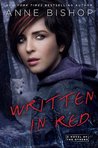
Review - Written in Red by Anne Bishop

Written in Red (The Others, #1)Written in Red by Anne Bishop
My rating: 4 of 5 stars

This is a novel which benefits from a patient reader who is willing to suspend early judgement. I had my doubts about it for a bit. The story is slow to become detailed enough for my enjoyment. There were times that I felt the internal "rules" of the Others weren't clear enough or followed consistently. For instance, early on we see the Others attack and eat 3 men who trespass, with no chance given for an explanation. Yet they tolerate Asia Crane's meddling with nothing more than snarls till she knowingly breaks a rule, at which point she is only banished. And in they meantime, the human employees come and go with no sense of terror. I feel like any sentient species should have worked up a consistent justice system, even if it is a violent one, in order to prevent complete anarchy from taking over. There must be some rule system that is not well shown.

However, as always, Bishop's characters shone through. While I wasn't a huge fan of the lead character, Meg, the secondary characters really pull you into the alternate world story that the author has built. There are many tales hinted at and left to explore in this world, which could easily surpass her Black Jewels series in complexity, if Bishop will stretch her authorial wings a bit. Sam was a particular favorite of mine, as Bishop uses him to let you get comfortable with the Others and then reminds the reader rather forcefully that he is a Wolf, not a dog. Her representation of two cultures at a crossroads of change was interesting; I was originally a little vexed with what appeared to be inconsistencies until I realized that two cultures starting to reach out to each other would be very hit-or-miss in their understanding.

Definitely recommended for fans of Bishop's previous work, who will find commonalities from earlier series amongst the newer elements of this setting. This would also make an excellent entry novel into alternate-world fantasy for a new fantasy reader, as it is not heavy on alternate vocabulary or magic rules which might be offputting to a novice reader. I am very much looking forward to the sequel, due out in about a year.

08 May 2014

Review - The Traitor Queen by Trudi Canavan

The Traitor QueenThe Traitor Queen by Trudi Canavan
My rating: 4 of 5 stars

I greatly, greatly enjoyed this one. This was definitely a trilogy that got better as it went, starting at "good" and finishing at "where's the next one?!?". Canavan's work is never the most subtly deep of the fantasy I read but her society-building is second to none. This book was a great culmination of the relationships and conflicts set up in the first two books, with some nice character moments throughout. In particular, I love Canavan's willingness to explore the "no right answer" problems when societies clash, as well as questions of how much do good intentions and acts outweigh bad societies and acts. Canavan's use of good people on the bad side of things versus bad people on the good side never devolved to the strawman level and promoted the idea that people are often much more complicated than they seem.

All-in-all, a pleasantly more thought-provoking read than I expected. Recommended to general fantasy fans as well as fans of Canavan's previous work. Reading the Traitor Spy trilogy is definitely helped by reading her prior Black Magician trilogy.

View all my reviews

Review - The Rogue by Trudi Canavan

The RogueThe Rogue by Trudi Canavan
My rating: 4 of 5 stars

Better than its predecessor, Canavan gets and keep the plot rolling through the entire book. I liked the introduction of Lilia to the cast, as we haven't had a Novice in this mix yet. (Although it's actually nice that the majority of the protagonists in this trilogy are middle-aged.) The plot moved much more steadily and continues to not revolve around the magical abilities of the characters as a device to move forward.

The aspect I continued to have the most trouble with, however, is connecting emotionally to the characters. It's a bit like a friend telling you a distressing story about someone you've never met. You know it must be horrible for them but you only sporadically connect their emotions with yours. There's nothing flawed in the storytelling per se, it's just my preference that I feel what the characters are experiencing.

Despite that, the story is engaging and I particularly appreciate Canavan's ability to portray all styles of relationships, from mentors and friends and lovers to the more ambiguous, could/should questions that come up in real life. I also like that her characters make intelligent choices and live with them, even when they're working on flawed information. There's a lot to admire in who her characters are as people, which is a nice change from much of what I've read lately.

Recommended to Canavan's fans and general fantasy readers. Easily appropriate for teens as well, for those who are concerned with content warnings.

View all my reviews

Review - The Ambassador's Mission by Trudi Canavan

The Ambassador's Mission (Traitor Spy Trilogy, #1)The Ambassador's Mission by Trudi Canavan
My rating: 3 of 5 stars

This was a fun, quick read, although I would have greatly benefited from re-reading the preceding trilogy and prequel. I had trouble remembering what the strengths/limits of the magic on this world are. Fortunately, Canavan's plot doesn't anchor on this point and it was easy to slip back into the Kyralian world regardless.

It felt like it took awhile for the story to get going but fortunately, I have the rest of the trilogy on hand to keep going. I'm especially impressed at Canavan's ability to differentiate individuals from their society; no character here is a stereotype. The plot itself does suffer a bit for the "telling instead of showing" problem but the characters are likeable enough to pull you through.

Recommended to Canavan's fans and those looking for a lighter fantasy read.

View all my reviews

07 May 2014

Review - The Mercury 13 by Martha Ackmann

The Mercury 13The Mercury 13 by Martha Ackmann
My rating: 5 of 5 stars

This was a great book to start my 2014 reading year. It has undeservedly languished on my shelves for nearly 8 years.

Ackmann tells the story of 13 women who passed the same or equivalent tests as those given to the Mercury 7 and other astronaut selectees of the 1960's. In roughly chronological order, she describes the development of a "girl astronaut" program by the U.S. Air Force, its cancellation, a subsequent private program, and how Congress and NASA eventually shut down even that avenue. The story is mostly told through the experiential lens of one of the women, Jerrie Cobb, who is the first to undergo testing. Ackmann tends to lionize Cobb somewhat but it's hard to blame her; each of these women had extraordinary accomplishments in their lifetimes.

The story is rife with the sexism of the time and Ackmann makes clear what is helping these women and what is holding them back. What makes this a 5-star read is Ackmann's skill at never over-demonizing any one person or institution. Using letters, government documents, medical records, and interviews, she has crafted a meticulous story that details how and why these women were denied their dreams of flying higher than ever before. While there are certainly heroes and villains in this story, the author backs up these positions with evidence and places it firmly in the context of prevailing social thought of the time.

Ackmann also does a tremendous job at showing how the approaches of the various women affected the outcome of their aspirations. She frames this through the conflict of Jerrie Cobb versus Jackie Cochran, another famous aviator of the time. As a reader, it was frustrating to read how Cobb and Janey Hart laid out valid points about women's inclusion in space exploration and to watch Cochran, John Glenn, Scott Carpenter, and George Low prevail by using the social mores of the time as cover. It is a credit to the author that this frustration comes through and a credit to these amazing women that they didn't lost it on the spot.

The rhetoric presented in this book bears a remarkable resemblance to the current "discussion" about women joining the ranks of combat troops. It could also easily be extended to the remaining arguments about homosexuals in the military. The facts and rebuttals presented by these women are just as true today as they were 60 years ago.

The story ends on a strong note, detailing that many of the remaining Mercury 13 pilots met to watch Eileen Collins' flight as the first female pilot of the Shuttle. It is fortunate that Ackmann captured their stories before these amazing women are lost to us, and history, forever.

I consider myself reasonably well read on the history of NASA and particularly the space race of the 60's, and some U.S. social history. Nonetheless, I learned a tremendous amount in completing this highly readable history. Strongly recommended for readers interested in space exploration, pilots, military doctrine, NASA's history, and social issues.

View all my reviews